
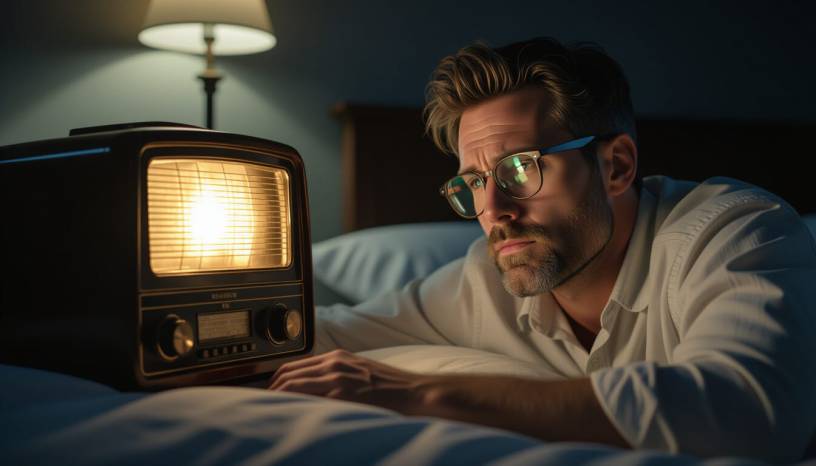
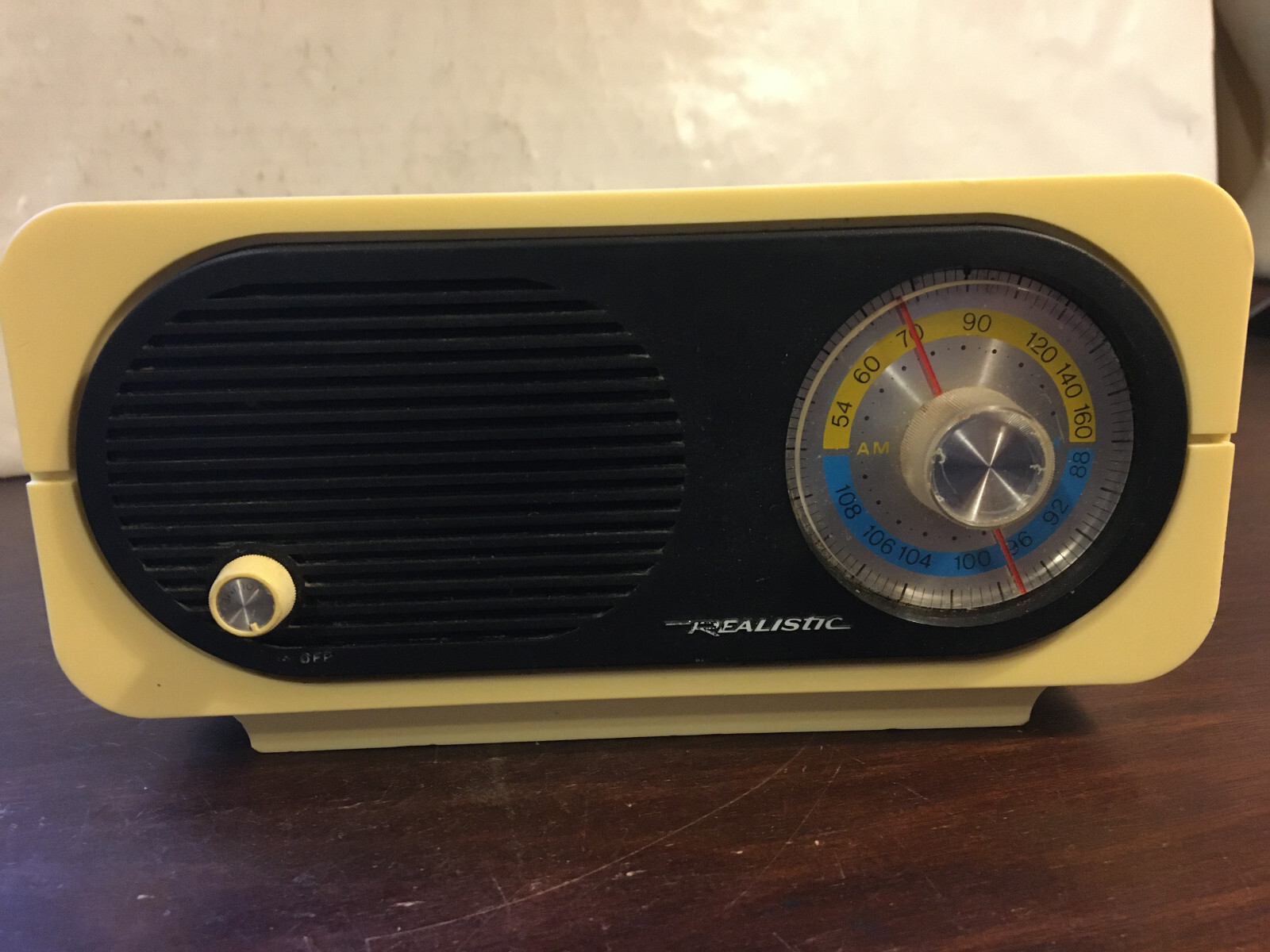
 The first time I understood radio, I was a kid in the 1970s lying awake long after I was supposed to be asleep. The only light in my room came from the amber glow of a battered AM dial, buzzing faintly with electricity and smelling like warm dust. I’d twist the knob and pull in WCIL out of Carbondale, mostly pop songs fading in and out of the static, local DJs cracking corny jokes as if they were speaking just to me, or sometimes Jonny King’s 1940’s nostalgia-soaked “Breakfast Serial,” or a replay of Kenny Everett that changed my life (separate post, but I’ll get to that). On clear nights, I could even snag KMOX out of St. Louis just up the road. That’s where I learned to love baseball, listening to my beloved Cardinals called live by Mike Shannon and Jack Buck from Busch Stadium, every crack of the bat and roar of the crowd arriving a split-second late but somehow more alive for it.
Those nights, staring at the ceiling in the radio’s glow, or on a school’s closed, snowed-in morning with a cup of hot chocolate, I realized I wasn’t alone. Somewhere out there, others were hearing the same voice, the same song, the same old radio play, the same ballgame, happening live and never to happen again quite the same way. That was my first taste of “ghost radio.”
Decades later, I was the one behind the mic. Indy In-Tune became my séance. I’d fire up a USB mic, cue a local band, and talk into the dark. Most of the time, the answer was silence. My early shows pulled in “tens of listeners.” I’d spend hours recording, editing, and uploading, only to see 27 downloads. Fifteen of those were me making sure the website worked right. At first, I thought I was doing it for fame or money. A part of me believed we’d “make it,” that Indy In-Tune would be the next big franchise going out to every mid-sized city. Those illusions didn’t last long. You can’t fool yourself after staring at a download counter that says … 12.
And yet, I didn’t stop. None of us did. Because ghost radio has its own kind of devotion. You keep the mic hot, not for charts or checks, but because the ghosts deserve it.
Indy In-Tune only worked later because of the people around me. I networked with an underground ecosystem of promoters, bartenders, sound guys, and stubborn musicians who refused to let Indy forget itself. We lived at the Vollrath’s chaotic lineups of people, too underground to be local. The Melody Inn’s “smoker’s garden” and eternal ghosts in the back room, which was never open. Locals Only, where the soundboard was always one cough away from death. Birdy’s, where every band swore “never again” but still came back if Indy In-Tune asked them to do a PodConcert. It wasn’t glamorous. It was never profitable. Still, it was alive, and sometimes that ghost echoed back at it.
That’s how we connected with Simon Saynor and Mark Kelley at Sine FM in Doncaster, UK, who I saw as our brothers in ghost radio. Early one week, not even a weekend, they set out to break their own world record for the longest continuous broadcast. (The legalities get weird, just go with my narrative here.)
My buddy and their cohort, Mark Loraine, called upon me to tune in and rally my meager forces to support this insane quest of theirs. I was riveted for three days. After one, their voices were already fraying. After two, delirium had set in–bursts of laughter at nothing, pauses stretched like eternity, songs blasting a little too loud because they’d lost track of the faders. They weren’t broadcasting to an audience; they were broadcasting for the broadcast itself. Apostles of static. Prophets of exhaustion. Ghost radio at its purest! Keeping the signal alive was the point.
At about 3AM Doncaster time, their local audience was long asleep. In Indianapolis, it was only 10PM, and the Indy In-Tune community was hanging out at their traditional Wednesday night open mic. Doing a bit of global time-zone math, I saw this as our duty to keep them company. I mobilized everyone around me and persuaded musicians to stop mid-set to crowd around my phone. Between songs, we texted encouragement and impromptu songs at them, shouting across the void: “Keep going, lads — you’re not alone!”
It wasn’t a massive crowd. Maybe a dozen of us, beers in hand, but I knew, in ghost radio, a dozen idiots can be an army. That night, we weren’t just an audience. We were part of that record. Doncaster wasn’t alone. The void wasn’t empty. We were going to make it global.
That’s what ghost radio creates: kinship. It’s not about big ratings or glossy syndication. It’s about keeping the flame alive when silence feels like surrender. I feel like Simon and Mark understood it. I understood it. We still chat occasionally to this day. We’re part of the same undefined brotherhood of people who kept talking into the static because to stop would be worse.
I think that’s what separates ghost radio from everything else. At first, you think you’re doing it for recognition. But in the end, you realize you’re doing it for devotion. You’re really doing it for the ghosts, for the sake of beating silence, for the fragile possibility that someone out there is awake, listening.
Of course, Covid hit, and the silence won. Venues shuttered. Promoters lost revenue. Bands broke up. Indy In-Tune wasn’t broadcasting into a void with the possibility of listeners anymore. It was broadcasting from inside the void at that point. Still, once you’ve sat in that childhood glow of WCIL, or stayed up past your bedtime to hear KMOX calling Cardinals night games, or kept vigil for a couple of mooks in Doncaster at 3AM (their time), you never really stop. You keep the ritual. You keep the mic hot. Even in silence, there might still be ghosts listening.
I’ve come to realize that the act itself is the point. Broadcasting is faith disguised as technology. It’s throwing signals into the dark and trusting they’ll land somewhere. It might be a band hearing their first airplay, even if it is “just Indy In-Tune, they play everyone local, eventually.” It might just be a stranger stumbling across an archive years later. It may be just a handful of faithful friends, showing up at an open mic to cheer for two exhausted Brits half a world away. Ghost radio isn’t futile. It’s devotion.
This is not to say devotion doesn’t mean you can’t laugh at yourself. I’ve done “worldwide” streams to a half-dozen spambots in the Discord channel. I’ve introduced bands to an “international audience” of twelve. I’ve played files that corrupted halfway through and pretended it was intentional and “intentionally artistic.” That’s ghost radio: the priest in an empty church still lighting candles because that’s what you do.
In a world where the internet feels increasingly fake, and the Internet is just bots arguing with bots or Spotify recommending the same five playlists, ghost radio is stubbornly human. It’s messy. It’s still small. It still doesn’t have an ROI. But it’s still real. It’s one voice in the dark saying, “Here’s a song. Here’s a story. Here’s something you might remember later.”
Even if nobody listens, the pattern exists, and as my hero, William Gibson, taught us in “Pattern Recognition” (also another great blog idea): “Leaving patterns behind is enough.”
So yes, Indy In-Tune is still ghost radio shouting from the void of “who cares?” in a basement full of spiders and two dead snakes. That’s the gospel of ghost radio: at first, you think you’re doing it for fame and money. In the end, you realize you’re doing it for devotion to the ghosts. Once in a while, though, when the static clears and it’s a quiet, cloudy night, you remember the amber glow of WCIL or the Cardinals on KMOX, and you realize you’re not alone. Someone else is awake, listening, sharing the moment live with you. You may never meet, but that moment will never happen again.
For me, that’s the whole point.
