


Well, this is a complex and complicated answer. Obviously, my moods and tastes shift constantly, and I’m never quite sure if the question is about nostalgia value, production quality, musical diversity, or technical prowess.
Who am I kidding? The short answer is Yes’ Close to the Edge.
It was one of the first CDs I bought and the last one I ever bought at a retail store. (I had a new car with a CD player and nothing to listen to. So I wandered into the mall like some lost soul from the ‘90s and walked out with the deluxe edition because it was the only thing in the store I could find worth dropping money on.) I’ve got it on cassette, vinyl, three different CD reissues, and I’m currently eyeing the anniversary vinyl/Blu-ray box set … and I don’t even own a turntable. This is how obsessions work.
For the uninitiated, Close to the Edge is a cornerstone of progressive rock. It’s consistently ranked among the top two prog albums of all time, depending on whether the writer understands that Dark Side of the Moon isn’t prog, it’s just stoner-friendly rock with a good laser show.
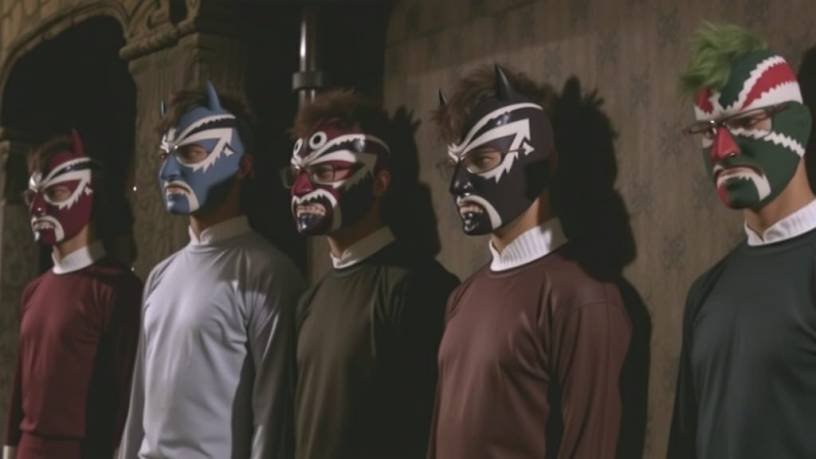
Now, those who know me also know I’ve got a thing for chop-socky cinema, specifically the films of the Venom Mob. What does this have to do with Yes? Nothing. And everything. See, my obsessions follow a pattern: I gravitate to over-the-top talent displayed with such excess that normal people dismiss it as ridiculous, or worse, self-indulgent. Allow me to demonstrate by mapping Yes’ lineup onto the Five Deadly Venoms.
Close to the Edge as a Venom Mob Analogue
Jon Anderson (The Snake)
Wei Pai’s Snake Style kung fu is subtle, mysterious, and impossible to pin down, much like Jon Anderson’s lyric book. “Seasons of man.” “River of constant change.” These aren’t lyrics, they’re fortune cookies written by a mystic locked in a sensory deprivation tank. To casual listeners, they sound like nonsense. But then the falsetto hits, the organ swells, and suddenly you’re nodding like enlightenment just brushed your shoulder.
Snake Style doesn’t need your understanding. It just needs your belief.
Steve Howe (The Centipede)
Lu Feng’s Centipede Style overwhelms with sheer speed and coordination, just like Howe’s opening guitar solo. Nobody “fakes” their way through Howe’s flamenco-baroque-country-jazz hybrid runs. Normal humans strum chords. Howe sprouts extra fingers mid-solo.
This is the part of prog rock people laugh at: “Too many notes! Over the top!” These are also the same people who probably make fun of Olympic gymnasts for spinning too many times while they can barely touch their toes.
Chris Squire (The Toad)
Lo Mang’s Toad Style is solid, rooted, unshakable. Blades bounce off him. Punches glance away. The only way to stop him is by poking a pressure point behind his ears and locking him in an Iron Maiden.
Enter Chris Squire. That Rickenbacker bass doesn’t just hold the floor, it is the floor. Critics once complained his bass was “too loud in the mix.” That’s like saying gravity is “a bit persistent.” It’s supposed to be!
Again, you can’t fake this. Cranking the bass knob at Guitar Center doesn’t make you Chris Squire. It just makes you “that guy” at Guitar Center.
Rick Wakeman (The Scorpion)
Sun Chien’s Scorpion Style is elegance with a lethal strike. That’s Wakeman to a tee. Sure, the cape is silly. Sure, the wall of keyboards looks like he’s compensating for something, but then he drops a Moog solo so sharp and clean the silliness evaporates and you’re okay with the cape.
This is the line between parody and genius. You or I could show up in a cape with a Casio, and the audience would laugh. Wakeman shows up in a cape, and the audience cheers, because he can back it up. The sting lands.
Bill Bruford (The Lizard)
Philip Kwok’s Lizard Style is angular, elusive, striking from impossible angles (like the walls or the ceiling at different points). Bruford is the drumming equivalent.
Try air-drumming Close to the Edge. I dare you. You’ll end up tangled in your own limbs while Bruford smirks in 7/8. He doesn’t just play off-beat—he moves the beat to where he wants it to be. That’s the perk of not having a click track.
This isn’t “excess for the sake of excess.” It’s mastery pushed so far that the rest of us throw up our hands and mutter, “Fine, you win,” before retreating to ’80s on 8. Yes gives you 19 minutes of notes, rhythms, and emotion. The Venom Mob gives you 85 punches, kicks, and flips with no camera cuts. Sure, it’s a lot, and it’s even presented as serious with bit of tongue in cheek. If you want to dismiss it on that basis, that’s your hang-up. We lack the skill. We don’t grasp the years of training. So we dismiss it as “too much” instead of admitting we’re not up to the task. The uncomfortable truth? The only people who call it ridiculous are the ones who can’t do it.
Okay, yes, I make fun of Wakeman’s cape, Anderson’s cosmic fridge-magnet wisdom, and kung fu villains who announce their “secret style” before fighting. I do it with respect, though, because I know I’m looking at talent so heightened it can only be expressed in absurdity.
“Over the top” is just another way of saying “beyond our reach.” These artists show us what happens when humans push themselves to the edge of absurdity and then keep going. Sometimes it’s camp. Sometimes it’s goofy. Sometimes it’s transcendent, however, and that’s the type of ridiculousness I’ll defend every time.
Further viewing …
