
The greatest opening line for a novel ever, as far as I’m concerned, is:
“The sky above the port was the color of television, tuned to a dead channel.”
I will not be taking questions.
If you read this line when it came out in the mid-1980s, you knew exactly what it meant.
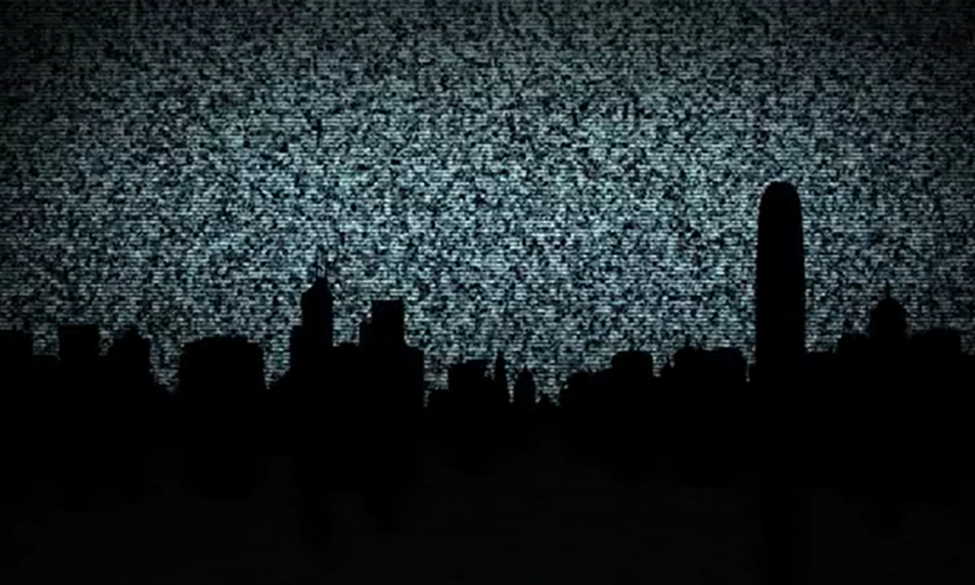
Gray, static-filled, unpleasant to look at — a perfect metaphor for pollution, decay, and the eerie white noise of nothing. Worldbuilding a dystopia and setting an emotional mood in a single sentence. Bravo!
To a kid reading it now, though?
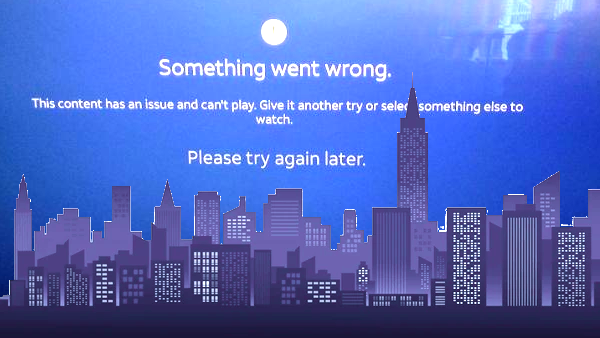
Different universe. The same words, but one generation sees an apocalypse, while the next sees Windows XP wallpaper.
This is the nightmare of writing speculative fiction. What feels timely and futuristic when you come up with it ages like green milk on Tatooine. One day, you’re proud of inventing the perfect piece of imaginary tech; the next, you’re doomscrolling Wired only to discover three Stanford dropouts have already launched a startup around it, complete with a cringey logo and seed funding.
I’ve lived this. More times than I can count, I’ve dreamed up some clever gizmo, reverse-engineered how it could work, wrote out the timeline for the chain of discoveries that made it happen like a proper nerdy footnote, patted myself on the back… and then three months later saw it in a Tweeted article from Futurist Magazine. At this point, I think I have maybe two really clever ideas left that someone hasn’t already turned into a business plan, and honestly, they’re just minor background details I threw in for color.
This problem is not unique to me. Even Stanley Kubrick sweated over it. While filming 2001: A Space Odyssey, he lost sleep worrying that NASA would land on the moon before his movie came out and make him look outdated. Not to mention the non-zero possibility he would drop his magnum opus about alien monoliths, only to have Walter Cronkite cut in with, “Breaking news: the Air Force got a call from some little green guys, and they’re coming to visit Earth next week.”
It’s not the worst fate, though. When Asimov, Clarke, Heinlein, and the rest of “those guys” got their predictions wrong, they just shrugged, asked their publisher for an advance, and retconned their own work in a sequel. Clarke basically said, “Okay, so maybe 2001 didn’t happen in 2001. Let’s just scooch the timeline forward a bit,” in a footnote in 3001: The Final Odyssey.” (2017? Wrong again, buddy.) Meanwhile, Prelude to Foundation, Robots of Dawn, and Rama II exist mainly to sweep up continuity crumbs. Readers forgave them. Heck, Clarke won a Hugo for a moon base that still doesn’t exist. Being wrong didn’t hurt them; it only sold more books.
Frankly, it stings a bit. Technology will always outpace us. Predictions will always age poorly. I believe, however, that the best speculative fiction doesn’t hinge on the gadgets. Orwell’s telescreens look laughably clunky compared to the iPhone in your pocket, but 1984 still resonates because it’s about paranoia, not screen resolution. Neuromancer is a masterpiece about humanity’s uneasy marriage with technology in the 21st century, and he didn’t even predict Wi-Fi or cell phones. Everything is hardwired in that universe. Still, it works because gadgets are props, and the story is about people.
When I was a kid, saying you liked sci-fi was basically social suicide. To adults, and most classmates, it meant ray guns, rockets, and bug-eyed aliens. It’s changed in recent decades, though. Maybe because half the “future tech” is now real or laughably obsolete. (Who needs a Star Trek replicator when you can tell your pocket AI, “Order my usual from Grubhub”?) Maybe it’s because enough Star Trek reruns have finally entered the zeitgeist that people finally understand it was never about phasers or Spock’s ears. It was the human condition disguised as a Saturday space adventure with a fearless hero, an intellectual outsider, and a cynical humanist debating big ideas in the margins.
That realization changed the way I wrote. My early ideas, such as downloadable consciousness, recordable dreams, and memories on disk, felt edgy in 2002 to the point where I had to explain them ad nauseam. By 2015, they were Silicon Valley pitch decks, and readers simply nodded along, “Okay, your universe has those too, noted.” By 2025, they’re boring tropes every sci-fi novelist has beaten to death. So, I stopped trying to beat reality to the punch and landing on empty air.
Instead, I pivoted away from coming up with or explaining gadgets and leaned harder into characters. I raided the collective unconscious for timeless figures — the warrior, the jester, the artist, the pilgrim — and tried to give them my spin with different desires, weaknesses, and backstories. Most importantly, I intentionally made them a bit anachronistic. Let’s face it, if I wrote “authentic” characters from the actual future, no one would get them. It would be like explaining TikTok to your grandparents. You know the funny looks, punctuated with, “I just don’t get you kids.” It’s the same trying to explain the psychology of a woman in a post-scarcity society to a reader who just wants a good story. Legitimate future emotions, desires, and fears wouldn’t make sense, and the drama would feel alien, at least without explanation, and how empathetic are you going to be after I’ve man-splained why you should feel bad for my lead character?
So, instead, I made my characters relatable in the present. They may live on space stations, but they’re still hard-boiled detectives, crusading journalists, neurotic doctors, or spies with too many secrets. They bring the future down to a human scale. The elevator pitches sound simple: spy novel, murder mystery, revenge epic. Inside, there are deeper themes being explored: technological racism, post-scarcity class wars, the erosion of human ambition, the futility of religion in a world where your brain can live forever in a virtual paradise of your choosing, whether you go to church on Sunday or not.
The trick, I think, is to build futures where gadgets are wallpaper, not the walls. Gadgets will betray you. They’ll become quaint, or worse, real. Betrayal, paranoia, love, and ambition work in any setting, century, and genre. Kubrick and Clarke knew it, even if they lost sleep over NASA scooping them. Gibson knew it, even if his dystopia confuses the kids on first read. The best sci-fi doesn’t need to predict the iPhone correctly. It needs to ask who we’ll become when the iPhone is already boring.
Now, if you’ll excuse me, I need to Google to see if some Stanford startup already trademarked one of my background props before I accidentally make some punk college kid rich … again.
