
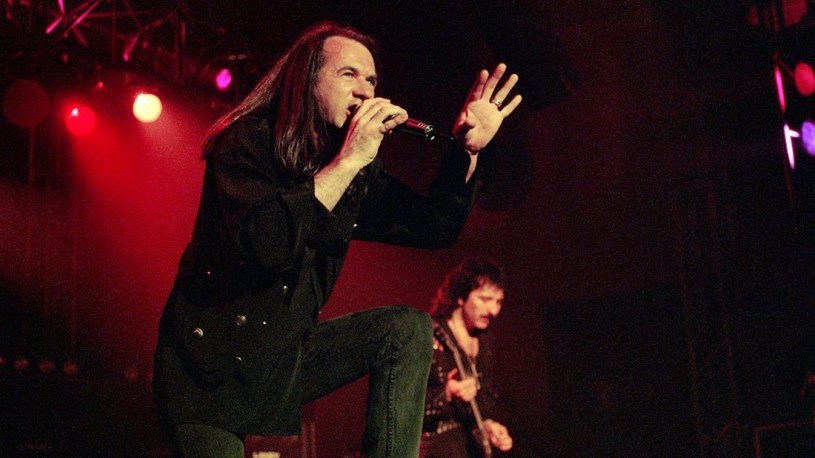
The number of blog posts in my “Draft” folder singing the praises of Tony Martin is, surprisingly, shocking. It appears that, in my many misadventures involving a tablet in a brewery tasting room, I’ve gotten on my high horse four or five times in the past year after trying to debate one of the “If it isn’t Ozzy, it isn’t Sabbath” or the “If it wasn’t for Dio, Sabbath would have died in 1979” crowd. Meanwhile, Tony Martin appears on 25% of the band’s studio albums and held the lead singer position for 10 years across two stints, and never once bit the head off anything.
Well, that’s apparently the crux of those blog drafts, which explains why I never finished or published any of them. However, recently, a buddy of mine, who apparently stalks me via Spotify, got introduced to Eternal Idol and Headless Cross and quickly joined my Tony Martin cult, which prompted me to tell him about my very strange relationship with Black Sabbath, until I decided maybe I should add that to my Tony Martin appreciation post and finally clear out my draft folder, even though nobody really cares but me. So, here it goes…
Like most ’80s teenagers, I discovered Ozzy, Black Sabbath, and heavy metal in general at around age 12 or 13. Like every junior high kid in America, my friends had become obsessed with Ozzy, and the Prince of Darkness was on every t-shirt, scrawled on every notebook, and etched into most of the bathroom walls at school. Ozzy was where the disheartened Kiss fans went after they decided they weren’t made for lovin’ you. Naturally, I reacted the only way a contrarian teenager could. I became obsessed with Black Sabbath. While my friends argued over Randy Rhoads guitar solos, I became that annoying kid who insisted there was a whole history before Ozzy’s solo career. I was the self-appointed Keeper of the Sacred Pre-1980 Knowledge. If someone suggested Ozzy’s career started with Blizzard of Ozz, I would appear from nowhere like a heavy metal Cliff Claven. “Well, funny you should think that, Nahmie, but actually…”
Then came the great schism. The boys finally got publishing rights back from their less-than-reputable manager and were eager to finally make money off the back catalog. In the winter of 1982, Ozzy released Speak of the Devil; Black Sabbath released Live Evil. If you were a Sabbath fan at the time, this was basically the theological equivalent of the Reformation. People chose sides, friendships were tested, and battles were fought.
In 1983, Ian Gillan joined Black Sabbath for one album and tour. Now, my father had introduced me to Deep Purple at the very impressionable age of five. Music was one of the few things we consistently connected over, so suddenly, there was common ground again. Somehow, the lead singer of Deep Purple was now standing in front of Black Sabbath, and Born Again became one of those albums that permanently attaches itself to a moment in your life. At the time, I thought this was merely an interesting musical coincidence. I would later learn it was only the beginning.
By 1986, I had my first serious romantic disappointment. Around the same time, Black Sabbath released Seventh Star. The funny thing is that neither one was what it was originally supposed to be. Seventh Star began life as a Tony Iommi solo album before being repackaged as Black Sabbath. My first relationship followed a similar trajectory. Both looked promising in concept, but ended up being something else. Both make considerably more sense in hindsight than they did at the time. I should have recognized the warning signs right there.
Instead, the pattern accelerated.
I went off to college the next year. At this point, being a Black Sabbath fan required commitment. Most of the world moved on. Sabbath was a relic that was changing lineups on every album. The glory days were gone. Of course, to me, now a life-long Yes and Kansas fan as well, this just means double-down on your fandom, the boys need you now more than ever!
Apparently, this worked on some cosmic level, because Sabbath and I formed an odd cosmic entanglement. It seems that every time a major relationship ended, I would mope my way down to the record store, and there — as if the band was saying, “Here, Darrin, maybe this will cheer you up…” — would be a previously-unseen Black Sabbath album in the “New Releases” bin. It was uncanny. This led to what is still today, my sure-fire breakup recovery technique.
- Step one: Acquire beer.
- Step two: Acquire Doritos (taco-flavored!).
- Step three: Listen to every Black Sabbath album in chronological order.
- Step four: Emerge enlightened and ready to move on with your life
Yes, it sounds ridiculous, because it is ridiculous, and because it works (your results may vary). Not only is there the weird timing issue: the album comes out right when you break up. You can also chart album success with the quality of the relationship that just ended, to the point that a review of the album and a critique of the relationship are practically interchangeable. Maybe the guys should have checked in with me before releasing certain albums.
1987 brought Eternal Idol. This came out right after my first college girlfriend dumped me. Everything about it felt unfinished. There were good ideas, good intentions, and good moments buried under many external complications. The result was an unstable lineup with too many moving parts that never quite became what it could have been.
Then came Headless Cross in 1989, one month before the first of three dumpings by my college sweetheart. To this day, I don’t understand it. Everything was there: The songwriting, the timing, the chemistry. The ingredients all seemed correct, and yet somehow it didn’t work. Still, the album holds up years later, at least.
1990 gave us Tyr. This was right after my rebound relationship from Headless Cross ended. Chef’s kiss. Now we’re talking. Tyr (and the girl) looked magnificent, sounded magnificent, oozed confidence and style, and were loaded with ambition. I was convinced this was the exclamation point at the end of my bachelor years. Sadly, aside from the leadoff track (I think among their best tracks ever), the rest of the album doesn’t quite excite you on the 20th listen as much as it did on the first ten, when you were blasting it in your ’91 cherry red Camaro with the t-tops out while delivering chicken wings around campus.
Then came Dehumanizer in 1992. Right after my first post-college relationship imploded. There was absolutely nothing wrong with the girl or the album. Nothing. The performances were excellent. The craftsmanship was undeniable. The problem was that it was chasing something that had already passed. It was part reunion; part reconstruction; part attempt to recapture a feeling from another era. Was it good? Absolutely. Was it strictly necessary? Maybe, but I missed the previous TYR lineup. Was it destined to last? I bet they thought so at the time.
Cross Purposes arrived in 1994. An old crush returns for a couple of months. The energy was familiar. Comfortable. Even enjoyable. But the entire enterprise seemed built around the question: “Remember how great things were when we were eighteen?” That turns out to be a bad foundation for both albums and relationships.
Then we arrive at Forbidden (1995) … aaaaand … the less said about this one, the better. I have no clever analysis here. Guys, what were we thinking? I’m guessing we all got bored and decided to hang out and listen to people we shouldn’t have? At least Iommi polished it up with a great remix decades later. I’m not going back to those scars.
Now, the capper to this serendipity: After those twin disasters in 1995 (low points for both the band and me), a year later, Sabbath was broken up, and I was married. While I bought the Iommi/Hughes albums and the Heaven and Hell album, by the time 13 came out, whatever the weird quantum entanglement was, it was gone now.
Granted, I know this is projection at best and erotomania at worst. The albums weren’t really commenting on my relationships. Tony Martin wasn’t consoling me with backward messages. I just used my album collection as a set of landmarks to understand where I was in life whenever things fell apart. The albums changed because I changed. The meaning came from me, not from the Sabs, though if they wanted to take credit and bill me for thirty years of emotional counseling, I suppose they’ve earned it.
Looking back, the significant bit isn’t that every breakup seemed to correspond to a Black Sabbath album; it’s that every time life became confusing, I instinctively went back to the same, comfortable well and happily sat in the dark, listening to it from start to finish. Suddenly, the world made sense again. In hindsight, therapy would probably have been better, but therapy doesn’t give you Megalomania or Hole in the Sky, so at best it’s a draw.

First of all, I had no idea Cliff had a last name. Thank you for that. Secondly, Erotomania is the sleeper masterpiece from Dream Theater’s Change of Seasons, so anytime I see that word (exceedingly rare), I’m transported back to my high school bedroom.
Now… I think the best possible movie you could ever hope to make is a Bill & Ted-esque time travel adventure where these totally cool dudes are tasked with going back to save one of your relationships so that a Tony Martin-era Sabbath album can chart at #1.
I think we know just the guy to write it…
LikeLike
I have the title: “Two Wrong Dudes: Thanks for Everything, Tony Martin.”
LikeLike