
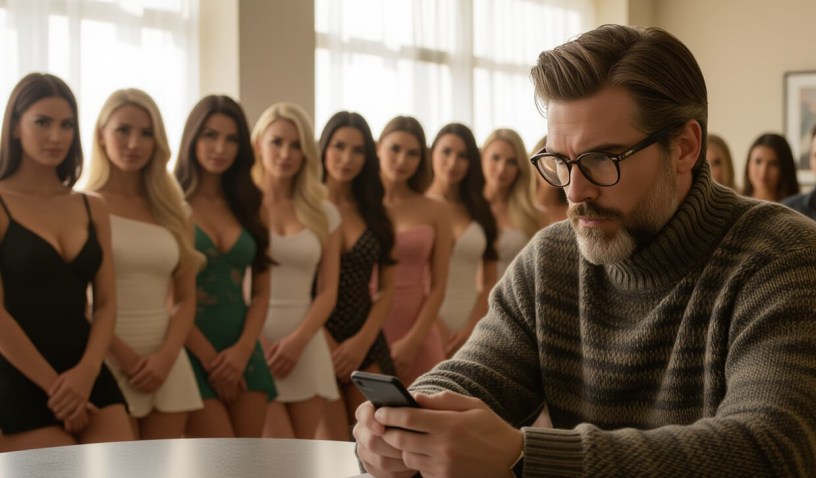
Dating apps promised abundance. An infinite database of compatible souls, each waiting to be queried with the right filter. “Just be yourself,” they said, as long as “yourself” fits neatly into a 256-character bio, six heavily curated photos, and the correct selection of hobbies and interests from our pre-curated list that doesn’t include any of your actual hobbies and interests. Sure, you can pick “stock opener questions” from a list of things you would never say on a date. You can pick your “ideal first date” from a dropdown of ten possible activities — six of which you know you wouldn’t enjoy; the other three, maybe, but they wouldn’t be in your top twenty ideas for a first date.
As a programmer and business analyst, it’s stupidly clear. No system can scale indefinitely without losing integrity. Somewhere around the millionth user, data stops being human and starts being metadata. Every person becomes a record. Key data points become height, distance, interests, etc. Emotional availability trends toward NULL.
Remember when you had to go out and meet people? Leave the house, make small talk, maybe even *gasp* eye contact?! That was so analog and 1990’s. Now we just swipe left, occasionally clear the cache, do a bit of A/B testing with our profile pics and responses. Stay within the parameters of what people expect for answers, though. Don’t be too honest or specific; otherwise, the query returns the equivalent of that dreaded SQL error “No Results Found.”
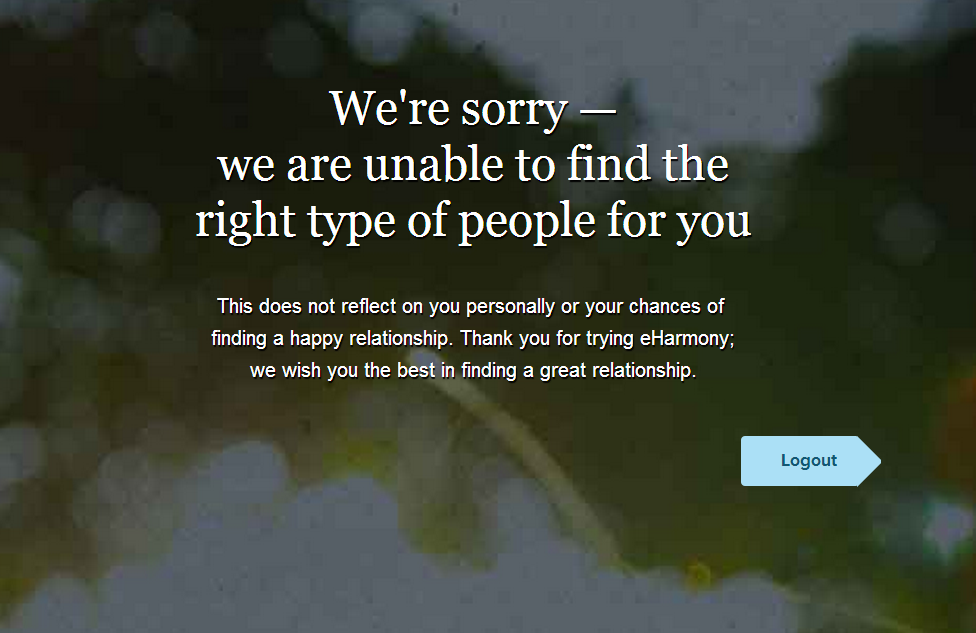
The apps themselves are astounding examples of every Internet conspiracy. You get all the joy of Wadhwa and Salkever’s dopamine factory. You get “relationships mediated by images,” as predicted in Debord’s Spectacle. You live in Baudrillard’s simulated realities, where every woman is rich, available, and suspiciously into … kayaking? (I keep meaning to look up if that’s a code for something like the avocado emoji.) And best of all, you get proof that Dead Internet Theory is alive and well since 60% of the girls who match with you all respond with the exact same generic phrases (no matter what the question) and eventually suggest you “move the conversation over to WhatsApp” because they’re closing their dating account now that they’ve met you. The database isn’t infinite at all. It’s just looping the same twenty girls with different haircuts, and 12 of them are scambots.
That’s when the fatigue sets in. You stop reading profiles. You start swiping on autopilot. The algorithm has trained you better than any relationship ever did. You become the UX pattern — optimized for engagement, not fulfillment. You think you’re on the sexy equivalent of Carvana, narrowing down your preferences with each swipe (which is also … sad … really …). In reality, you’re on the “human market” equivalent of Twitter newsfeeds, hoping to eventually find an article you want to read, while secretly they’re hiding it from you to keep those ads coming.
I remember the early 2000’s when “meeting someone online” was scandalous. It was actually pretty darn effective back then, since the scammers hadn’t caught on yet. Now dating “apps” are the default and have replaced just about everything else. So, yay humans for taking all the friction out of finding people and all the connection out of meeting them. The more efficient it gets, the less it means. Why write a love letter when you have a thumbs-up emoji as one of three suggested one-click responses? No more ache from waiting by the phone for them to call; go live your life, we’ll send you a push notification when they see your message … so you’ll know they’re intentionally ignoring you.
Sure, once in a while somebody seems cool. You trade a few messages, she’s got witty banter, she makes a few impressively obscure references, you agree to lunch or coffee, but you’re stuck in the loop. That mythical database is in your head…
What if you can do even better? What if she’s just three more swipes away? What if the algorithm just hasn’t quite optimized for you?
Now you’re treating dates like a proof-of-concept demonstration.
The prototype is passable. Now let’s refactor and redesign for production.
There’s the myth. Your love life is a problem of scaling up, not out. Dating apps say that quantity will, by design, lead to quality, but human connection doesn’t work that way. You don’t spray-and-pray looking for a dinner companion the way a recruiter looks for project managers to fill that one job at the Department of Child Services that seems to come open every six months. (Seriously, how awful is that place!? They’ve been looking for a good PM for years!) You need to scale up, not out. I once had a girl make a huge show of deleting the dating app at dinner on our first date… you know… as a gesture of commitment. “Don’t worry, I can always download again.” This is where we’ve landed in 2026: “I love you” … but with version control.
The funny thing is, that’s the intent of these apps. They don’t want you to be happy. They want you to keep doomscrolling people. They don’t want you to find someone. They want you to continue searching. They’re the people equivalent of YouTube’s “autoplay next video” button. Sure, you can uninstall the app, but they don’t care. They’ll rotate in a fresh new bunch of people before that inevitable night when you hit “peak lonely” and reinstall it.
Maybe I’m just old. Maybe I miss when a first date required courage, not cell coverage. When rejection was personal enough to sting and therefore meaningful. When a spark meant chemistry, not a Wi-Fi signal. Five years ago, I decided I’d rather die alone or be “that guy in the club” than try to crack the code of how to get dating apps to work for me. It’s like debugging old legacy code. You think if you’re thorough and meticulous, you can get a clean compile. Instead, you realize middle-aged dating isn’t an infinite database. It’s an optimistic loop of applying patches to your same old vulnerabilities one swipe at a time.
